
Draft for clinical review
Orlistat
Active ingredient: orlistat
An oral prescription medicine that may be considered for weight management after clinical assessment.
Treatment from £49.99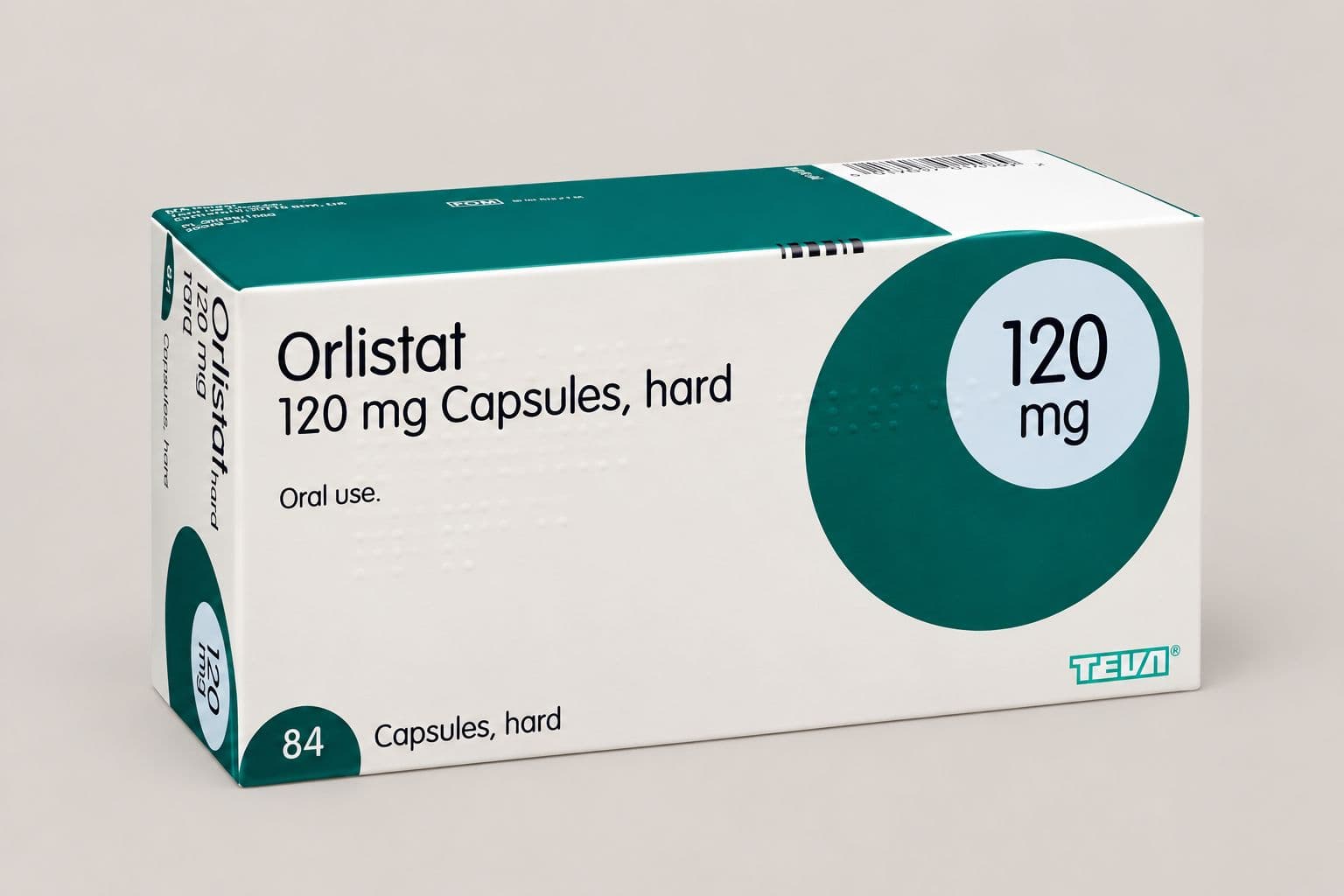
What is it?
Orlistat is a medicine used to treat obesity. Prescription-strength orlistat is available following clinical assessment.
Lower-dose products may be available from a pharmacy, but patients should still check suitability with a pharmacist or doctor.
How does it work?
Orlistat reduces how much fat from food is absorbed by the body.
It is used with a balanced, calorie-controlled diet. Eating high-fat meals can increase gastrointestinal side effects.
How is it taken?
Orlistat is supplied as capsules and is usually taken with meals that contain fat.
Patients should follow the instructions on the medicine packaging and the advice from their prescriber or pharmacist.
Who may be suitable?
It may be considered for adults living with obesity, or overweight with weight-related health problems, where a clinician decides it is suitable.
Suitability depends on body mass index, health history, medicines, diet and individual risk factors.
Who may not be suitable?
Orlistat may not be suitable for some people, including those with cholestasis, malabsorption problems, certain kidney conditions or previous serious reaction to orlistat.
A clinician or pharmacist should review medical conditions and current medicines before treatment is supplied.
Common side effects
Common side effects can include oily or fatty stools, needing to open the bowels urgently or more often, wind with oily spotting, stomach discomfort and diarrhoea.
These effects can be more likely after high-fat meals.
Important safety information
This page is a draft for clinical review and is not a substitute for advice from a prescriber, pharmacist or another healthcare professional.
Seek medical advice if side effects are severe, persistent or concerning, or if you develop symptoms such as severe abdominal pain, allergic reaction symptoms or bleeding from the back passage.
A clinician will consider your medical history, current medicines and whether orlistat is appropriate before prescribing.
Pregnancy and breastfeeding
Orlistat is not used during pregnancy.
It is not usually used while breastfeeding because there is limited information about use in breastfeeding.
Interactions / other medicines
Tell the prescriber or pharmacist about all medicines, supplements and herbal products you use.
Orlistat may interact with medicines including warfarin, amiodarone, levothyroxine and some medicines for HIV, depression or anxiety.
Severe diarrhoea can reduce the effectiveness of oral contraception, so additional contraception may be needed.
What happens if treatment is considered?
If treatment is considered, you would complete Keltoi's existing weight management assessment.
A prescriber reviews the information you provide and may ask for more detail before making any prescribing decision.
Treatment is only prescribed where the clinician decides it is clinically appropriate.
Official Patient Information Leaflet
For full information about orlistat, including how to use it, warnings and precautions, possible side effects and storage information, please read the official Patient Information Leaflet provided by the manufacturer.
Looking for weight management support?
Keltoi provides private doctor led weight management assessments. Treatment is only prescribed where clinically appropriate.